I cannot remember when Weld Arch first caught my attention. I vaguely remember seeing a photo of a large natural arch which beautifully framed lush rainforest with a whole wild river flowing through. Wild Magazine was prominent in my childhood home so perhaps that’s where I spotted it. The arch being in the south of the state and me being from the northwest coast meant it did not feature in my shoestring-budgeted youth where trips south were few and far between.
When the bushwalk.com discussion forum became a thing in the noughties I put a question out and received a suitably vague reply with just the right amount of cryptical information on how to find this mythical location. At the time I was a busy IT Manager and doing my best at being a hands-on dad to three young children, so the information was slotted away – for twenty years as it so happened.
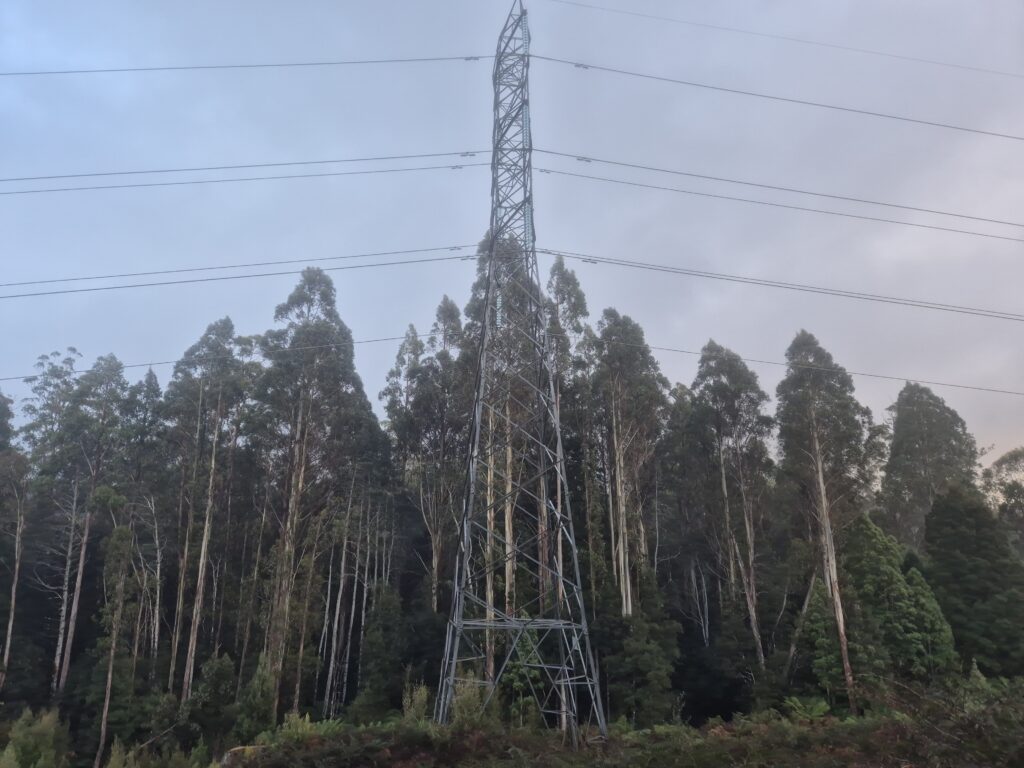
Fast forward to the twenties and in the Spring of ‘26 I had a free weekend and decided to dust off those cryptic instructions. They involved a high-voltage transmission tower with a specific number, a taped route and the seemingly sage advice that it was an overnight mission. It took a chunk of Saturday to rediscover the instructions and significant time was spent poring over maps, so it wasn’t until Sunday morning that I headed out with a deadline of needing to be back in Hobart for a work commitment at midday Monday.
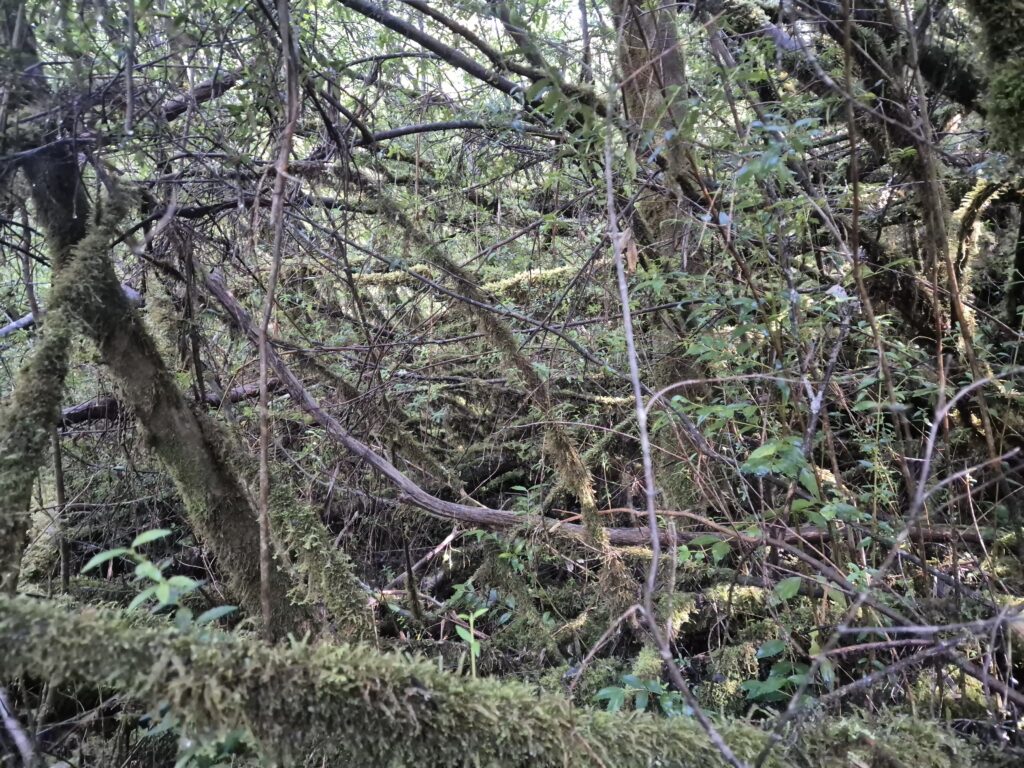
My adventure started with a 7km road bash before entering delightful myrtle rainforest and the start of a gradual descent towards the Weld. After a short distance the taped route lurched into almost two kilometres of horizontal scrub. A lot of chainsaw work had been done in recent history but there were still several places where I had to crawl through mossy mud to get my pack under horizontal doing what horizontal does.
Suddenly the route emerged from the horizontal and ascended onto a diminutive ridge adorned with massive gum-topped stringy barks. I decided I had lugged the big pack far enough so I pitched my tent, shouldered my day pack and gave myself the six hours of remaining daylight to see if I could make it to the arch and back by nightfall.
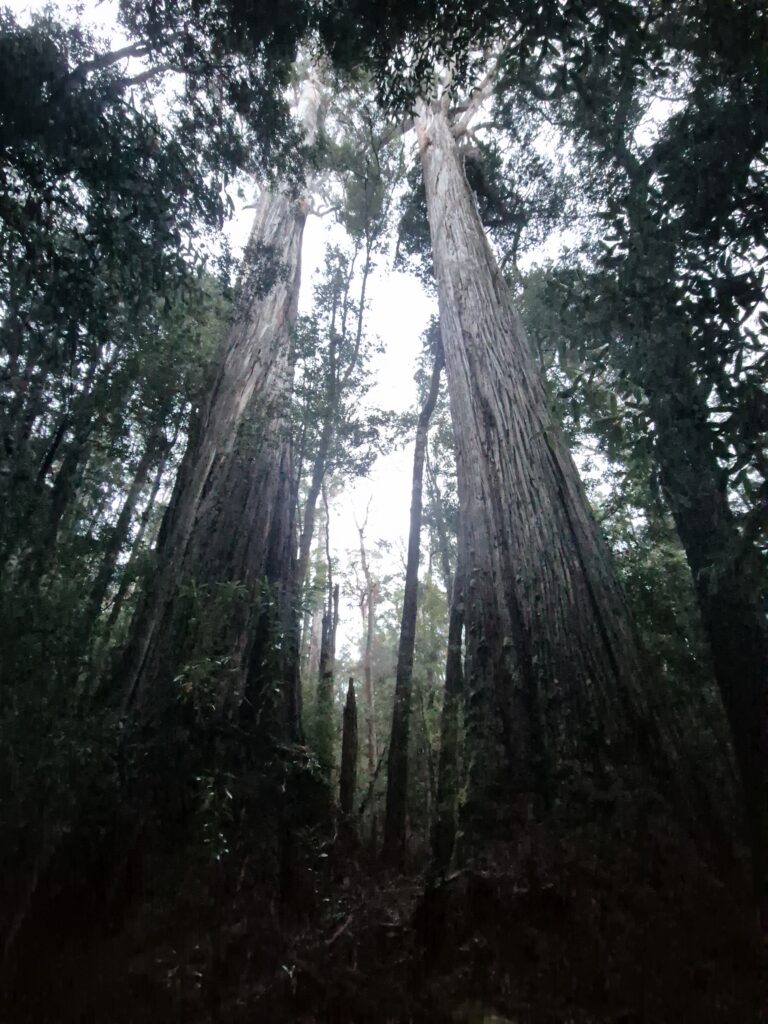
From my campsite the route descended through tall and delightfully open forest. Above-ground features such as strange ridges, small cliffs, oddly straight gullies and weirdly clear streams indicated the karstic nature of the landscape despite the underlying dolomite being hidden deep below layers of moss and peaty soil.
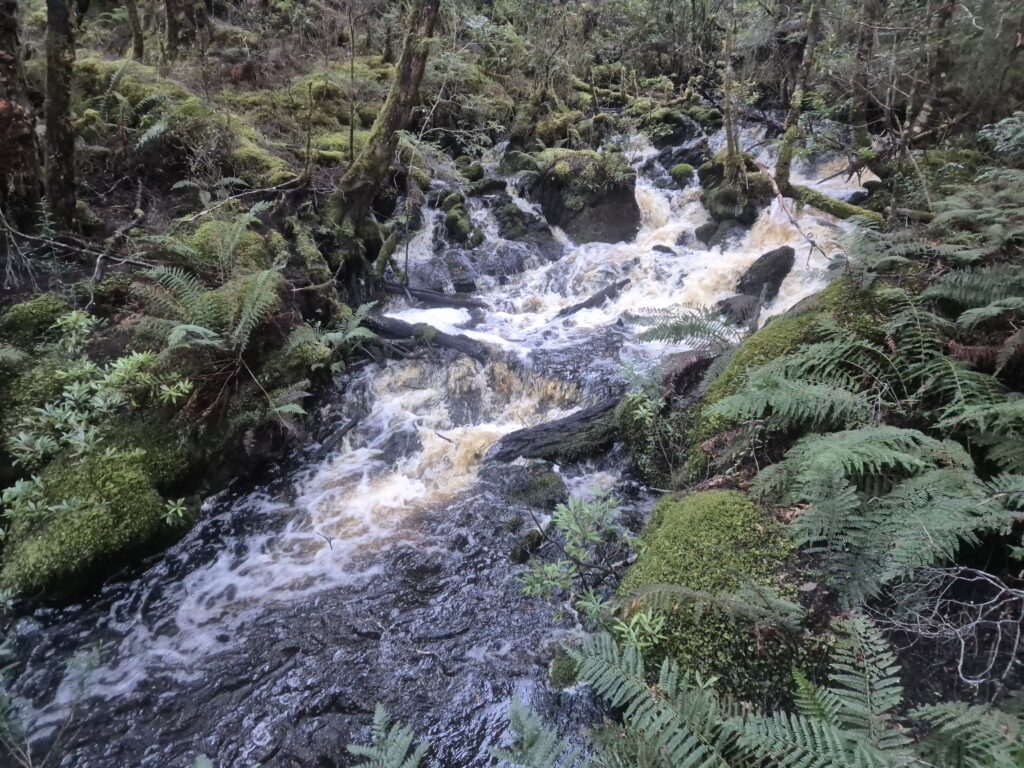
After a brief, almost vertical descent I met the Weld River at a beautiful bend with a side stream to cross. At this point I was only a short distance (as the currawong flies) from Bone Cave which a Google search told me was rich in bones and stone tools indicating occupation by generations of Palawa over long periods of time. However, as soon as I had arrived at the Weld River, my guiding pieces of plastic tape took me uphill and away from where I expected to be going. As I climbed steeply but easily through the tall, open forest I pondered whether the route had been deliberately directed away from such a significant archaeological site or whether this really was more efficient than following the Weld downstream to the Arch.
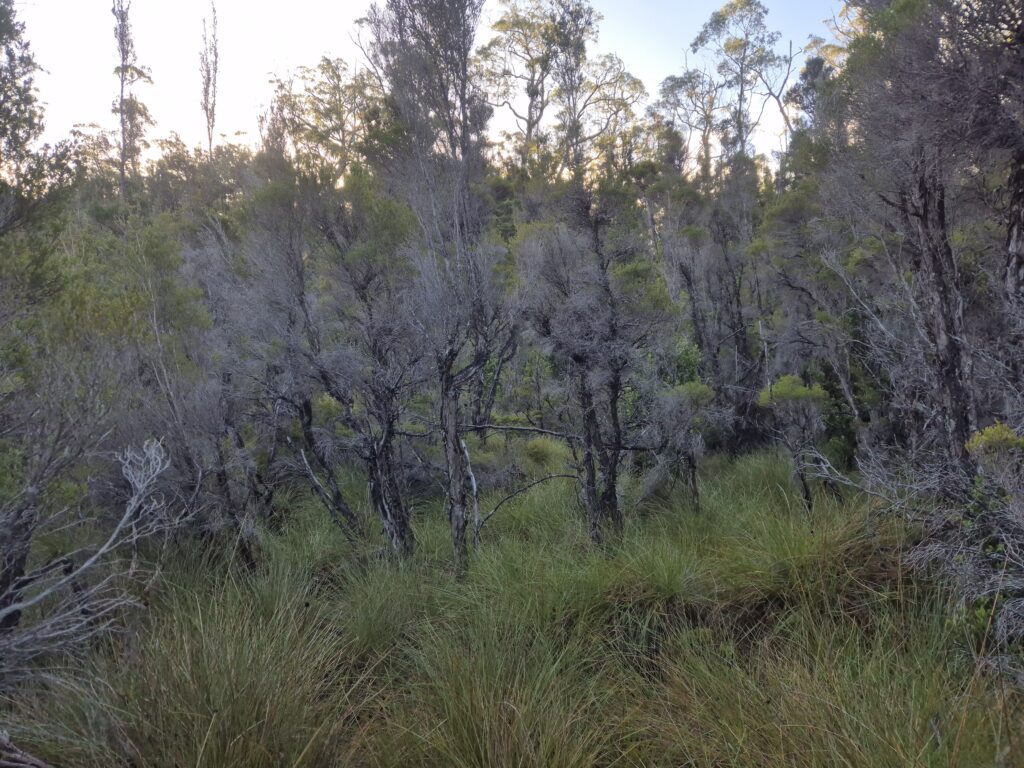
After an equally steep but shorter descent on the other side of the hill another stream was crossed before the terrain suddenly switched to drier forest with patches of tea tree and button grass. At my third side stream since first encountering the Weld, the track crossed to the far bank and then finally followed this tributary towards where I expected to find the Arch.
With my turn-around time rapidly approaching I started rushing and, consequentially, lost track of the taped route. Rather than waste time looking for tapes I simply followed the stream which had just become a bit steeper with a couple of attractive cascades after which it became oddly straight as if following a human-made channel. As I pondered this oddity the stream suddenly turned right towards the hillside where the sound of an invisible waterfall was emanating from below a log jam at the foot of a cliff – a swallet! Karst country for sure.
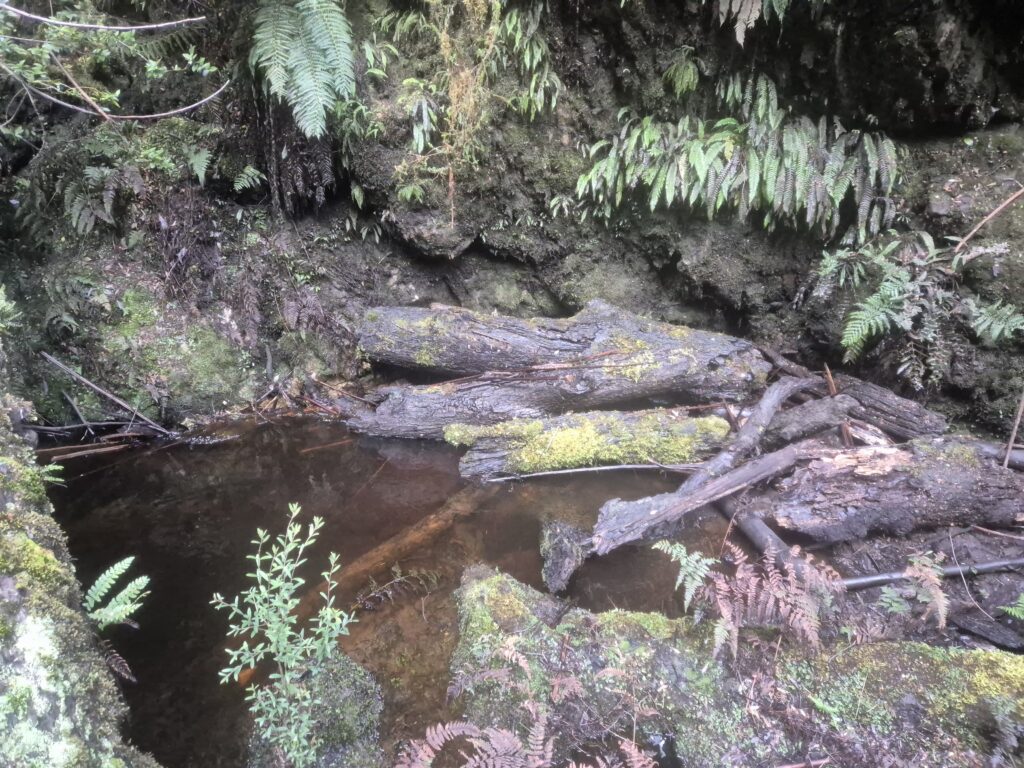
With my turn-around time reached, I resisted a sudden urge to poke and prod at the logs to see if I could release the dam and reveal the flooded cave entrance. I could just picture myself slipping in the process and being washed into a strainer deep below with no chance of sending a satellite text for help – a nasty thought! Weld Arch was still at least a kilometre away and 150 vertical metres below me so, after circumnavigating my swallet, I rediscovered the taped route beside a dry creek bed where occasional pools indicated the swallet must overflow from time to time.
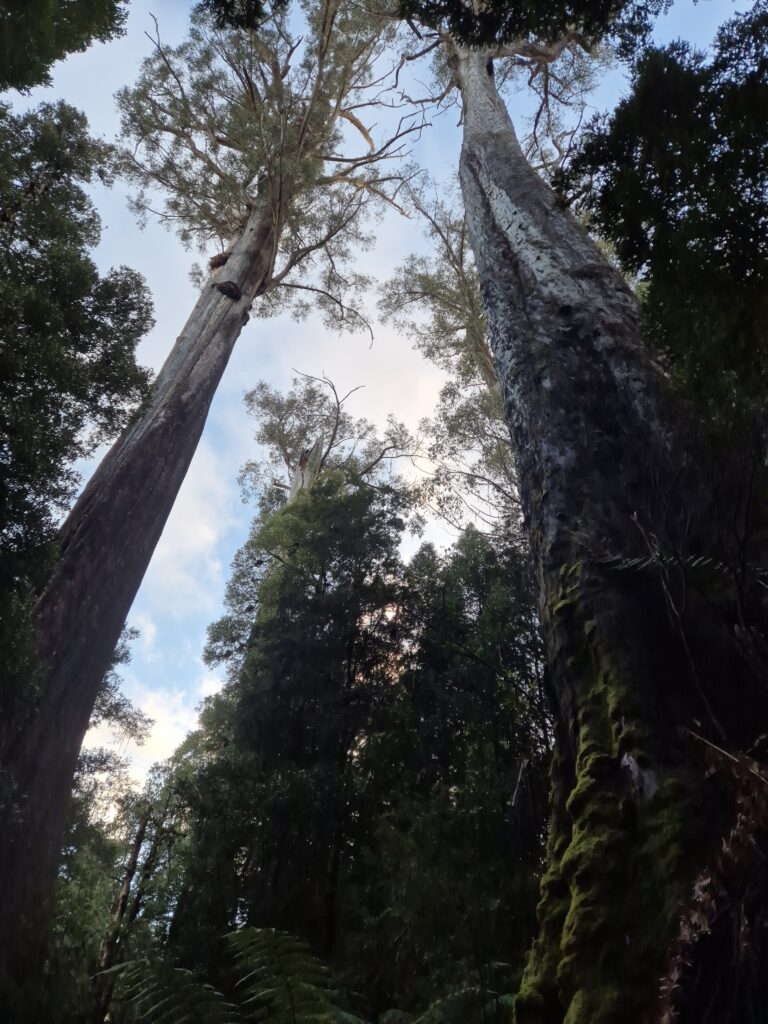
My brief swallet detour ended up taking me ten minutes beyond by turn-around time and, sure enough, I ran out of daylight and tapes what should have been ten minutes before reaching the tent. A quick lesson was learned when I switched my headtorch on and found I was on the edge of a 20-metre-high cliff with no plastic tape in sight. I was breadcrumbing on my watch so, after descending from my unintentional perch, I used that to regain my outward route to suddenly find the watch was telling me I was way over the other side of the route which could not be possible. I realised that in this dense forest the watch was having trouble locking onto the satellites and I needed to pause, get a good position fix and then, follow the watch back onto my outward route. It was a great relief when, only a few more bits of tape later, I saw the reflectors on Kylie’s old Goondie smiling down at me.
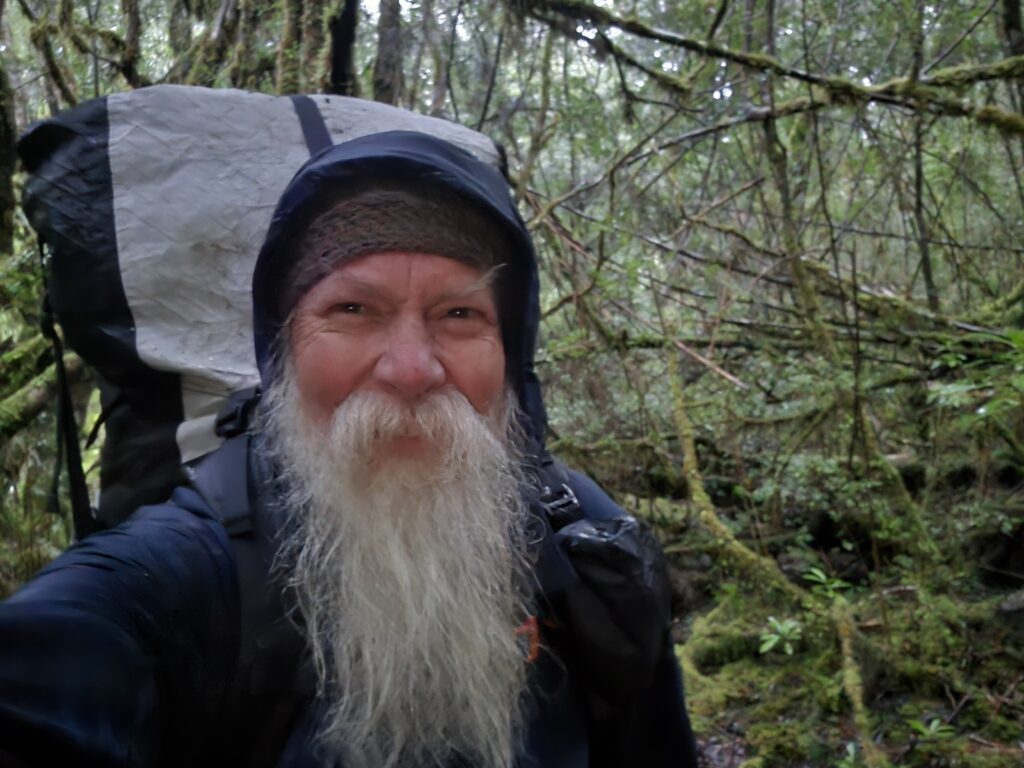
Over diner I quietly hatched a plan to return and finish the job but, the following morning I first had to drag my pack back up through the horizontal and back along the road after which I had to investigate a hunch. I had parked at a locked boom gate but the closed road I was following on foot was smooth, well-maintained but weirdly unused in terms of vehicular tracks. Once I was back at my car, I just had enough time to investigate my hunch. Sure enough, as it turns out, the power line access road is only locked at one end. On my next visit I would be able to drive straight to the transmission tower and a day mission should be possible!
TO BE CONTINUED…
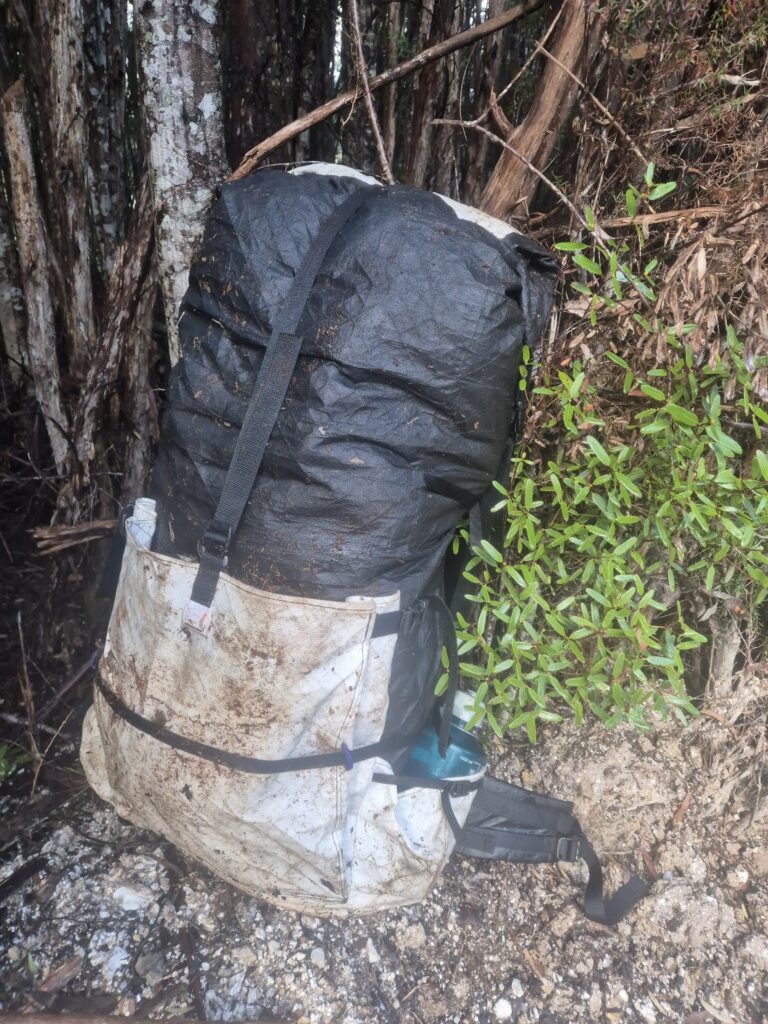
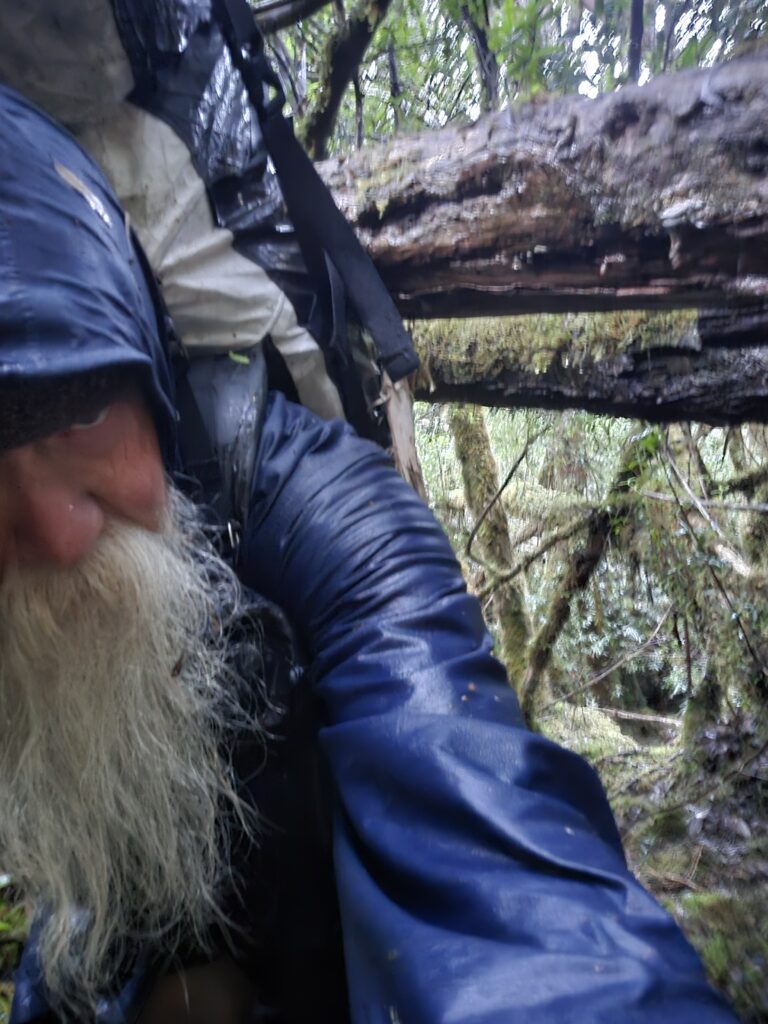
P.S. I recently bought a massive new light-weight but super strong and waterproof backpack from Scoparia Designs. It’s appropriately called The Beast. After surviving the rigours of airport baggage handling to/from Uluru (which doesn’t really count), this was its maiden voyage into Tassie scrub complete with being dragged through the infamous horizontal scrub. It worked a treat and, at two whole kilograms lighter than my previous canvas packs, it’s a winner in my books!